

A great voiceover takes more than a good voice. The script, preparation, delivery and recording environment all play a part in the quality of the finished audio.
Whether you’re recording a voiceover for a personal project, building a career in voice acting or preparing for a professional studio session, a little preparation can make a big difference.
At On Air Audio Services, we work with voice talent and producers every day. Here are five practical voiceover recording tips to help you get the best possible results.
1. Take Care of Your Voice
Your voice is your most important recording tool, so give it the attention it deserves.
Before a recording session, try to get a good night’s sleep, stay hydrated and give yourself time to warm up. Keep water nearby during the session, especially if you’re recording for an extended period.
It’s also worth avoiding anything that leaves your mouth feeling dry or makes you clear your throat repeatedly. Everyone has different habits, so pay attention to what works best for your voice.
If you’re feeling under the weather or your voice is unusually strained, let your producer know before recording.
2. Practice the Script Out Loud
Reading a script silently and speaking it aloud are two very different things.
Take time to read through your script before the recording session. This helps you become familiar with the wording, identify tricky phrases and work out where natural pauses and breaths should fall.
Pay particular attention to:
- Unfamiliar names, places and technical terms.
- Words or phrases that are difficult to pronounce.
- Long sentences that may need a natural pause.
- Numbers, abbreviations and product names.
- Any words or phrases the producer wants emphasized.
If you’re unsure how to pronounce something, ask before recording. It’s much easier to clarify a word in advance than to discover a pronunciation issue halfway through the session.
3. Find a Comfortable Recording Position
Good posture can help you breathe comfortably and deliver your lines naturally.
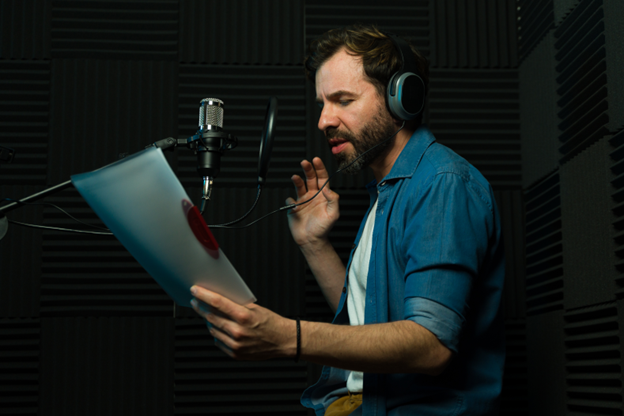
Many voice artists prefer standing because it allows them to move freely and use gestures to bring more expression to a performance. However, sitting can work just as well when you’re comfortable and maintaining an upright posture.
The important thing is to avoid hunching over or restricting your breathing. Give yourself enough room to move naturally without changing your position so much that it affects your microphone technique.
Experiment to find the position that helps you deliver your best performance.
4. Listen, Take Direction and Adjust
A good voiceover isn’t simply about reading the words correctly. It’s about understanding the message and delivering it in the right way.
Listen carefully to the producer’s direction and any instructions included with the script. Consider the intended audience, the purpose of the recording and the tone you’re being asked to convey.
As you practice or record, pay attention to your:
- Pacing: Are you speaking too quickly or slowly?
- Clarity: Are all the words easy to understand?
- Tone: Does your delivery suit the message?
- Emphasis: Are the important words receiving the right attention?
- Breathing: Are your pauses and breaths sounding natural?
Listening back to a recording can reveal things you might not notice while speaking. Be open to adjustments and don’t be afraid to try a different delivery.
5. Be Mindful of Your Microphone
Microphone technique takes practice, especially if you’re new to recording.
Speaking too close to a microphone can create unwanted popping sounds, particularly on words beginning with P and B. Speaking too far away can make your voice sound less present.
A consistent distance and position will help maintain an even recording. Slightly turning your mouth away from the microphone can also help reduce plosive sounds, depending on the microphone and setup.
Remember that microphones pick up more than your voice. Paper shuffling, clothing rustling, tapping a desk and adjusting a microphone stand can all end up in the recording.
If you’re working in a professional studio, your producer or audio engineer can help you find the right microphone position and make adjustments as needed.
A Better Voiceover Starts with Preparation
Whether you’re recording at home or in a professional studio, preparation, practice and attention to detail all contribute to a better voiceover.
And if you’re working with professional voice talent, an experienced producer can help guide the session, provide direction and make sure the final recording sounds just right.
Have a voiceover project coming up? Get in touch with On Air Audio Services to discuss your recording needs.